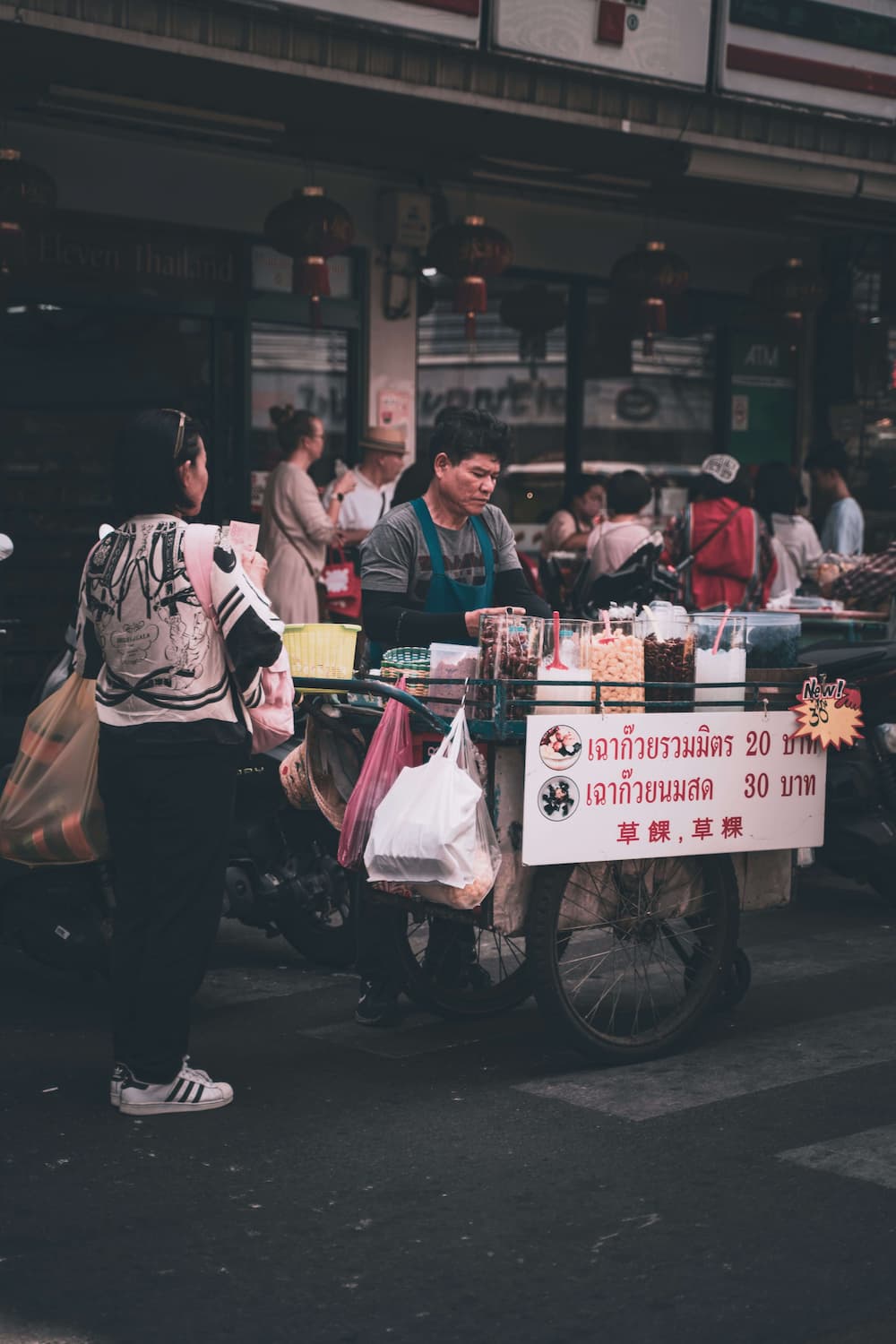
Phuket's night markets look effortless from the outside — rows of glowing stalls, the smell of charcoal grills, music in the background, hundreds of people moving through the lanes with food, shopping bags, and cold drinks. And they mostly are effortless once you know how they work. But first-time visitors make the same five mistakes consistently, and each one costs time, money, or the chance to have the experience they actually came for. Here's what to know before you go.
1. Not All Phuket Night Markets Are the Same
This sounds obvious until you realize how many visitors treat Phuket's markets as interchangeable. They're not. The island has roughly ten active night markets, and they serve genuinely different purposes and audiences.
The markets in Patong — OTOP and Malin Plaza — are geared almost entirely toward tourists. Prices reflect that. The atmosphere is lively and convenient but not particularly local. They're perfect for a casual first evening when you're still finding your feet.
The markets in Phuket Town operate at a completely different register. Chillva Market draws young Thai residents and feels like a genuine community venue. The Lard Yai Sunday Walking Street is a cultural event with a historic Old Town backdrop. Naka Weekend Market is a Thai-first shopping and eating experience that happens to also welcome tourists. These require a 30–40 minute Grab or taxi ride from Patong, but that distance is the entire point — it takes you somewhere that doesn't exist purely for your benefit, and that difference is felt immediately.
Kata Night Market sits in between: geared partly toward tourists staying in the beach area, but consistently good value and genuinely accessible.
The most common mistake first-time visitors make is spending their entire Phuket trip eating at OTOP or Malin Plaza and concluding they've "done the night markets." They've barely started.
2. Cash Is Non-Negotiable
The single most practical thing to know about Phuket's night markets is that they run almost entirely on cash. ATMs exist in the surrounding areas, but the moment you're inside a market and want to buy something — food, clothing, a souvenir, a drink — you need Thai baht in hand. Cards aren't accepted at the vast majority of stalls. QR payment via Thai bank apps works for some vendors, but only for travelers with Thai bank accounts.
The practical solution is simple: withdraw cash before you arrive at the market, not after. Most shopping malls near the major markets — Central Festival near Naka, Jungceylon near OTOP in Patong — have ATMs with low fees and reliable service. Withdraw more than you think you need. A typical evening of market food, a drink, and a small purchase runs to 300–600 baht per person, so carrying 1,000 baht per person is a safe baseline.
Small denominations are useful for buying from individual street food vendors. Having several 20 and 50 baht notes avoids the awkwardness of handing a 1,000 baht note to a stall charging 40 baht for a skewer.
3. Timing Changes Everything
Every night market in Phuket has a sweet spot — a window of time when the food is freshest, the crowd hasn't yet reached its most chaotic, and the energy of the market is at its most enjoyable. Most first-time visitors arrive either too early or too late.
Arriving at 4:30–5:00 PM means walking into a market that's still setting up. Food stalls are just firing up, and some of the best vendors are still arranging their displays. The advantage is cooler temperatures and easy access to seating. The disadvantage is that the full market experience hasn't yet materialized.
Arriving at 8:30 PM or later means the crowds at popular markets like Naka or Chillva are at their densest, parking is impossible, and the most popular food items have often sold out at busy stalls.
The ideal arrival time for most Phuket night markets is 6:00–6:30 PM. The heat has broken, the markets are fully operational, the best food is fresh and abundant, and the crowd hasn't yet hit its peak. Arrive early enough to walk a full circuit before committing to anything, and plan to eat between 6:30 and 8:00 PM.
On Sundays, the Lard Yai Walking Street is worth arriving at 5:00 PM specifically — partly for the cooler temperatures, and partly because the late-afternoon light on the Sino-Portuguese shophouses makes for genuinely beautiful photographs before the full evening crowd arrives.
4. The Best Food Isn't at the Most Visible Stalls
In every night market across Phuket, the stalls positioned at the entrance or along the main thoroughfare tend to have the highest prices and the most effort invested in their signage and display. This is strategic. First-time visitors see them first and assume they're the most popular.
The genuinely best food at most Phuket night markets is found by walking further in. The stalls in the interior — the ones without large English menus, the ones with Thai people queuing in front of them, the ones where the cook has clearly been doing the same dish for years — are almost always better and cheaper than the entrance stalls. At Naka Market, the best food is in the far back sections. At Chillva, the best grilled seafood is toward the rear of the food zone. At Lard Yai, the most authentic Phuket-specific dishes are sold by older vendors toward the western end of Thalang Road.
The simplest rule: walk past three rows of stalls before you buy anything from the first one.
5. One Market Per Evening Is Enough
Many first-time visitors to Phuket try to optimize their evenings by visiting two or three markets in a single night. This almost never works well. The travel time between markets, the logistics of transport, and the time needed to properly experience any single market all work against it.
Phuket's best night markets each reward at least 90 minutes to two hours of unhurried exploration — walking the full circuit once, returning to the stalls that interested you, sitting down to eat properly, and simply absorbing the atmosphere. Naka Market needs two hours minimum to do it justice. Lard Yai Walking Street on a Sunday is a two-to-three hour experience if done properly. Chillva is enjoyable for at least 90 minutes.
The most satisfying Phuket market evenings are built around a single destination, a good meal, a cold drink, and no rush to leave. Phuket has enough different markets — spanning different neighborhoods, different nights, and different characters — that spreading them across different evenings over the course of a week is the optimal approach. One market per evening, done slowly and without pressure to be anywhere else, is always better than rushing through two.
Your Phuket Night Market Itinerary by Day
- Evening 1 (any night): OTOP Market or Malin Plaza, Patong — easy, walkable, good for first-night orientation
- Evening 2 (Mon–Sat): Chillva Market, Phuket Town — your first genuinely local experience
- Evening 3 (Sat or Sun): Naka Weekend Market — the island's biggest, don't skip it
- Evening 4 (Sunday): Lard Yai Walking Street, Phuket Old Town — the most culturally distinctive market in Phuket
- Evening 5 (any night): Kata Night Market — relaxed, affordable, great food court, perfect for a quieter night
Browse all Phuket market listings on this site to find hours, addresses, and detailed guides for every market listed above.